
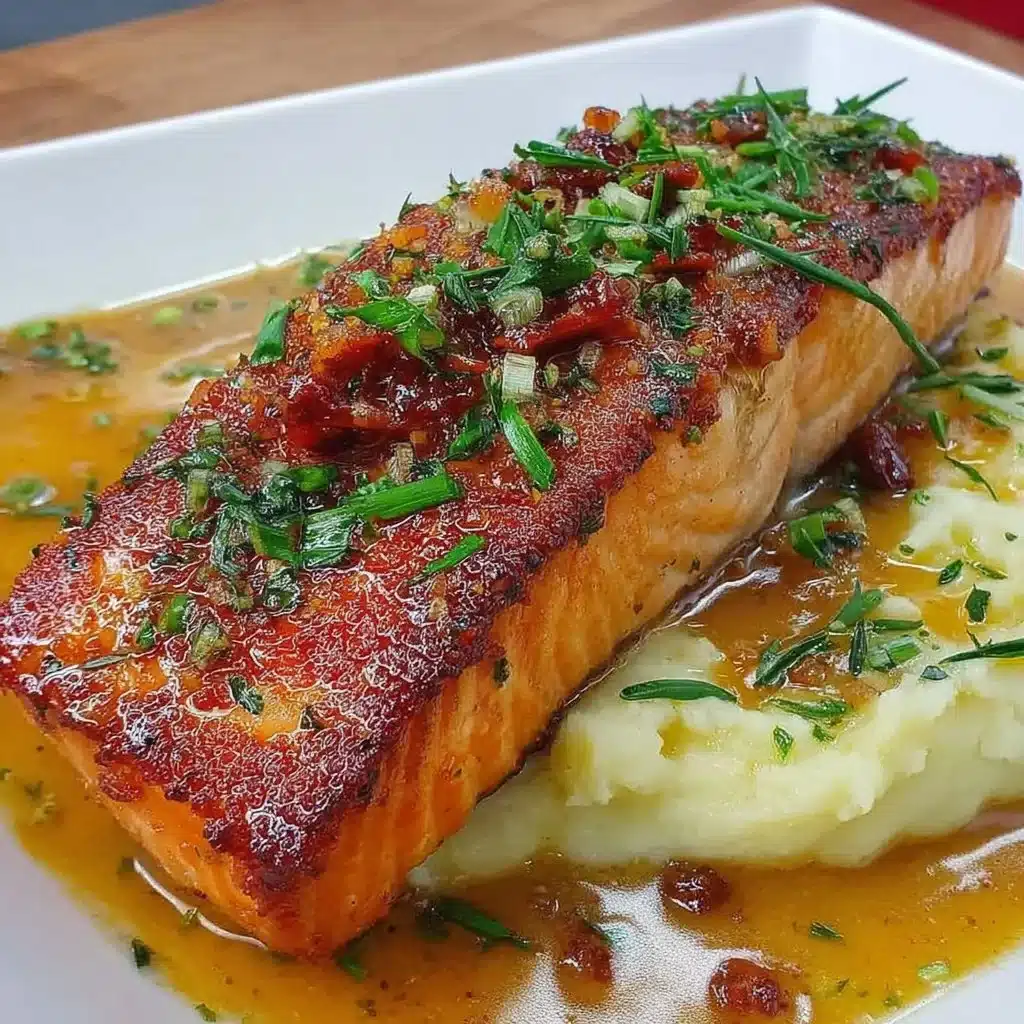
Baked Teriyaki Salmon
Baked Teriyaki Salmon — the first time I made this at the height of autumn, my kitchen smelled like apple pie and toasted sesame, and the golden fillets came out sticky-sweet and tender. It quickly became a weeknight favorite and a cozy holiday staple for friends who come by for seasonal treats. If you love baking through the seasons, this recipe is forgiving, fast, and full of fall-friendly flavor.
Introduction
There’s something inviting about a warm, oven-finished fish on a crisp evening. This Baked Teriyaki Salmon pairs beautifully with roasted root vegetables or a simple rice bowl. If you enjoy pairing salmon with seasonal sides, you might also like this comforting baked salmon with roasted zucchini recipe I often serve alongside it: baked salmon with roasted zucchini. The method is simple enough for beginners but produces a restaurant-quality glaze that feels celebratory.
Ingredients
- 1 1/2 to 2 pounds salmon fillet, skin on or off (center-cut)
- 1/3 cup low-sodium soy sauce
- 1/4 cup pure maple syrup
- 2 tablespoons honey
- 2 tablespoons rice vinegar
- 1 tablespoon toasted sesame oil
- 2 cloves garlic, minced
- 1 teaspoon grated fresh ginger
- 1 tablespoon cornstarch mixed with 2 tablespoons water (slurry)
- 1 tablespoon sesame seeds (optional)
- 2 scallions, thinly sliced
- Salt and pepper to taste
This Baked Teriyaki Salmon glaze is intentionally alcohol-free and balanced—sweet, savory, and slightly tangy—so it suits family meals and holiday gatherings.
Step-by-step Instructions
- Preheat and prep
- Preheat your oven to 400°F (200°C).
- Line a baking sheet with parchment paper or foil for easy cleanup.
- Make the glaze
- In a small saucepan over medium heat, combine soy sauce, maple syrup, honey, rice vinegar, sesame oil, garlic, and ginger.
- Bring to a gentle simmer, stirring for 2–3 minutes.
- Stir in the cornstarch slurry and simmer until the sauce thickens to a glossy glaze, about 1–2 minutes. Remove from heat.
- Prepare the salmon
- Pat the salmon dry and season lightly with salt and pepper.
- Place the fillet skin-side down on the prepared pan.
- Brush half the glaze over the salmon.
- Bake
- Bake the salmon at 400°F for 10–14 minutes, depending on thickness. For a fillet about 1 inch thick, aim for 10–12 minutes.
- In the last 2 minutes, brush on another layer of glaze and switch the oven to broil for a short burst (watch carefully) to caramelize the top.
- Finish and serve
- Remove from oven, sprinkle with sesame seeds and scallions, and let rest for 2 minutes before serving.
- Serve this Baked Teriyaki Salmon with steamed rice, roasted veggies, or a bright salad.
Tips for Success
- Use room-temperature salmon: Let the fillet sit out for 15–20 minutes before baking for more even cooking.
- Don’t overbake: Salmon continues to cook after it’s out of the oven. Aim for a slightly translucent center when you take it out and let it rest briefly.
- Brush in layers: Adding glaze midway and again at the end builds a deeper flavor and a shiny finish.
- For crisp skin: If leaving the skin on, pat it very dry and finish under the broiler for 1–2 minutes to get it crisp.
- If you’re exploring seasonal sides, try pairing your salmon with baked blueberry cottage cheese bowls for a sweet breakfast-for-dinner vibe or a baked brie appetizer to start a fall supper: baked blueberry cottage cheese bowls and baked brie with cranberry-pecan topping.
Possible Variations
- Gluten-free: Use a tamari or certified gluten-free soy sauce for an easy swap to make this Baked Teriyaki Salmon gluten-free. Serve with gluten-free churros as a fun dessert twist: baked gluten-free churros.
- Honey-maple glaze: Increase maple syrup and omit honey if you prefer a single sweetener with deeper flavor.
- Streusel topping (sweet-savory): For an unexpected texture, mix gluten-free panko or finely chopped almonds with a tablespoon of maple syrup, a pinch of salt, and 1 teaspoon grated ginger. Press lightly on top in the last few minutes of baking for a crunchy finish.
- Sheet-pan meal: Add chopped cabbage, carrots, and thinly sliced potatoes around the salmon and roast everything together for an all-in-one meal inspired by simple baked chicken and cabbage combinations: baked chicken with cabbage slaw (swap chicken for salmon in the idea).
Storage Recommendations
- Refrigerator: Store cooled salmon in an airtight container for up to 3 days. Keep glaze separate if possible to preserve texture.
- Freezer: Cooked salmon can be frozen for up to 2 months. Wrap tightly in plastic wrap and place in a freezer-safe bag. Thaw overnight in the refrigerator before reheating.
- Reheating: Warm gently in a 300°F (150°C) oven for 8–10 minutes or microwave at low power to avoid drying. Add a spoonful of water or extra glaze to retain moisture.
Conclusion
This Baked Teriyaki Salmon is a cozy, reliable recipe that invites seasonal sides, easy weeknight dinners, and festive gatherings. For another take on perfectly glazed, oven-baked salmon, check out this detailed Baked Teriyaki Salmon resource on Eat With Clarity: a detailed Baked Teriyaki Salmon recipe on Eat With Clarity.
Frequently Asked Questions (FAQs)
- How long do I bake Baked Teriyaki Salmon?
- Bake at 400°F (200°C) for 10–14 minutes depending on thickness. Thicker fillets need more time; aim for a slightly translucent center.
- Can I make the teriyaki glaze ahead of time?
- Yes. The glaze stores in the refrigerator for up to 5 days. Rewarm gently before brushing on the salmon.
- Is salmon compatible with a streusel topping?
- Yes. A light sweet-savory streusel of nuts or gluten-free panko and a touch of maple syrup adds crunch. Add it in the last few minutes of baking to prevent burning.
- What’s the best way to reheat leftover Baked Teriyaki Salmon?
- Reheat gently in a 300°F (150°C) oven for 8–10 minutes with a splash of water or extra glaze, or use low-power in the microwave to avoid drying out.

Baked Teriyaki Salmon
Ingredients
For the salmon
- 1.5 to 2 pounds salmon fillet, skin on or off (center-cut) Fresh salmon works best.
- 2 tablespoons honey
- 1 tablespoon toasted sesame oil
- 1 tablespoon sesame seeds (optional) For garnish.
- 2 scallions thinly sliced For garnish.
- Salt to taste Salt and pepper to taste
For the teriyaki marinade
- 1/3 cup low-sodium soy sauce For a gluten-free version, use tamari.
- 1/4 cup pure maple syrup Natural sweetner.
- 2 tablespoons rice vinegar Adds a bit of tang.
- 2 cloves garlic, minced
- 1 teaspoon grated fresh ginger
- 1 tablespoon cornstarch mixed with 2 tablespoons water (slurry) To thicken the glaze.
Instructions
Preheat and prep
- Preheat your oven to 400°F (200°C).
- Line a baking sheet with parchment paper or foil for easy cleanup.
Make the glaze
- In a small saucepan over medium heat, combine soy sauce, maple syrup, honey, rice vinegar, sesame oil, garlic, and ginger.
- Bring to a gentle simmer, stirring for 2–3 minutes.
- Stir in the cornstarch slurry and simmer until the sauce thickens to a glossy glaze, about 1–2 minutes. Remove from heat.
Prepare the salmon
- Pat the salmon dry and season lightly with salt and pepper.
- Place the fillet skin-side down on the prepared pan.
- Brush half the glaze over the salmon.
Bake
- Bake the salmon at 400°F for 10–14 minutes, depending on thickness. For a fillet about 1 inch thick, aim for 10–12 minutes.
- In the last 2 minutes, brush on another layer of glaze and switch the oven to broil for a short burst (watch carefully) to caramelize the top.
Finish and serve
- Remove from oven, sprinkle with sesame seeds and scallions, and let rest for 2 minutes before serving.
- Serve this Baked Teriyaki Salmon with steamed rice, roasted veggies, or a bright salad.