
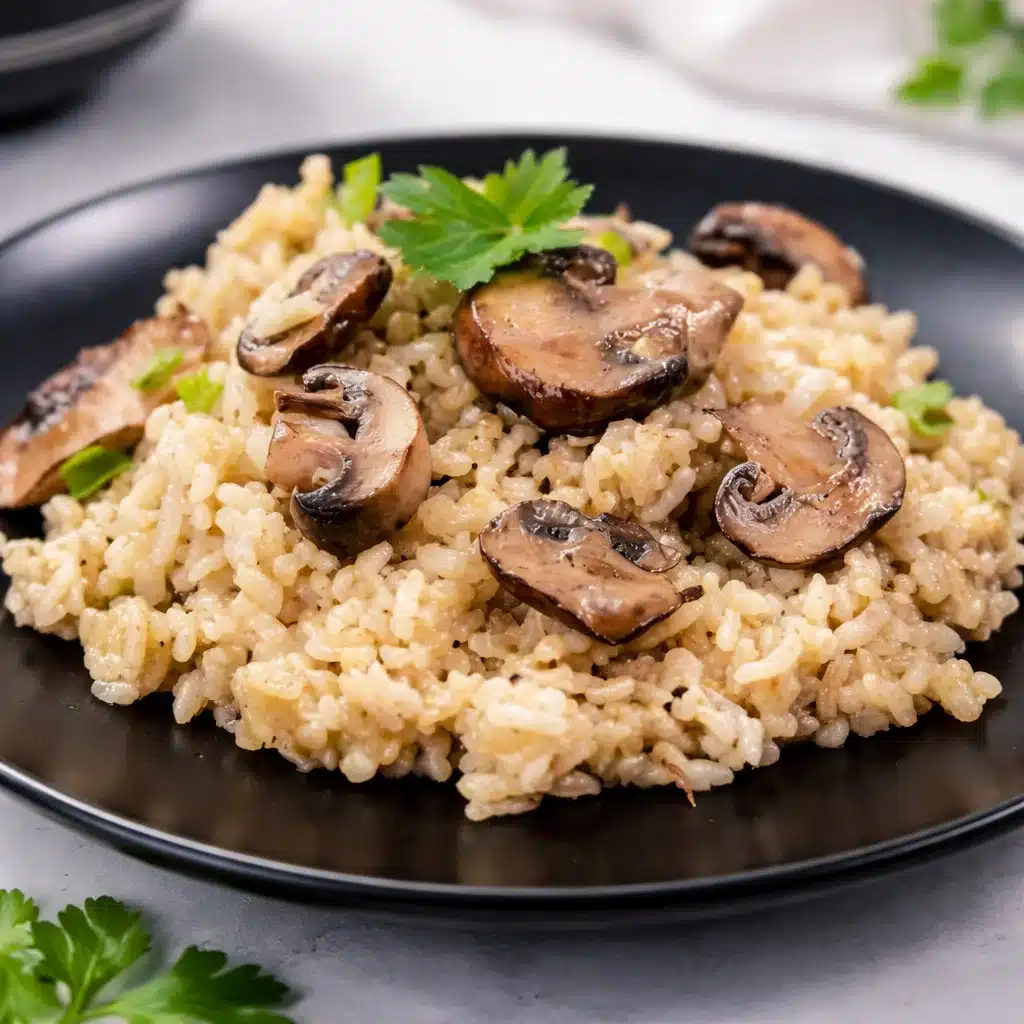
is risotto gluten free is one of those questions I’ve heard a thousand times at dinner parties, usually right after someone spots the rice and relaxes a little. I totally get it because risotto feels like it should be safe, but the details matter. I’ve had restaurant risotto that was perfect, and I’ve also seen versions that quietly sneak in gluten through broth, add ins, or even a dusting of flour. So let’s unpack it in plain English and make sure you can enjoy a cozy bowl without second guessing. And yes, I’m also sharing how I make my favorite simple gluten free risotto at home.

Is risotto gluten-free?
Classic risotto is made from rice, most often Arborio, Carnaroli, or Vialone Nano. Rice is naturally gluten free, so in its simplest form, risotto is usually safe.
But here’s the real life catch: risotto is only gluten free if everything added to it is also gluten free. In my experience, the biggest troublemakers are **broth**, **seasoning blends**, and certain **restaurant shortcuts**.
What can make risotto not gluten free?
If you’re ordering out or using packaged ingredients, keep an eye on these:
- Broth or stock: Some brands use yeast extract or flavorings that may contain gluten, or they’re made in shared facilities.
- Beer: Some cooks add a splash for flavor. Not common, but it happens.
- Soy sauce: In an “Asian inspired” risotto, regular soy sauce is a gluten source.
- Processed add ins: Sausage, deli ham, and pre seasoned meats can contain fillers.
- Cross contact: Restaurant pans, shared ladles, or a kitchen that thickens sauces with flour nearby.
When I’m in doubt, I ask one direct question: “Is your broth gluten free and do you make this risotto in a dedicated pan?” If the server looks unsure, I go with something else. I’d rather be full and safe than stressed.
If you’re building a full gluten free comfort meal at home, I love pairing risotto nights with something simple like this satisfying gluten free baked chicken and vegetables dinner. It’s the kind of meal that makes you feel like you’ve got your life together, even if the sink is full of dishes.
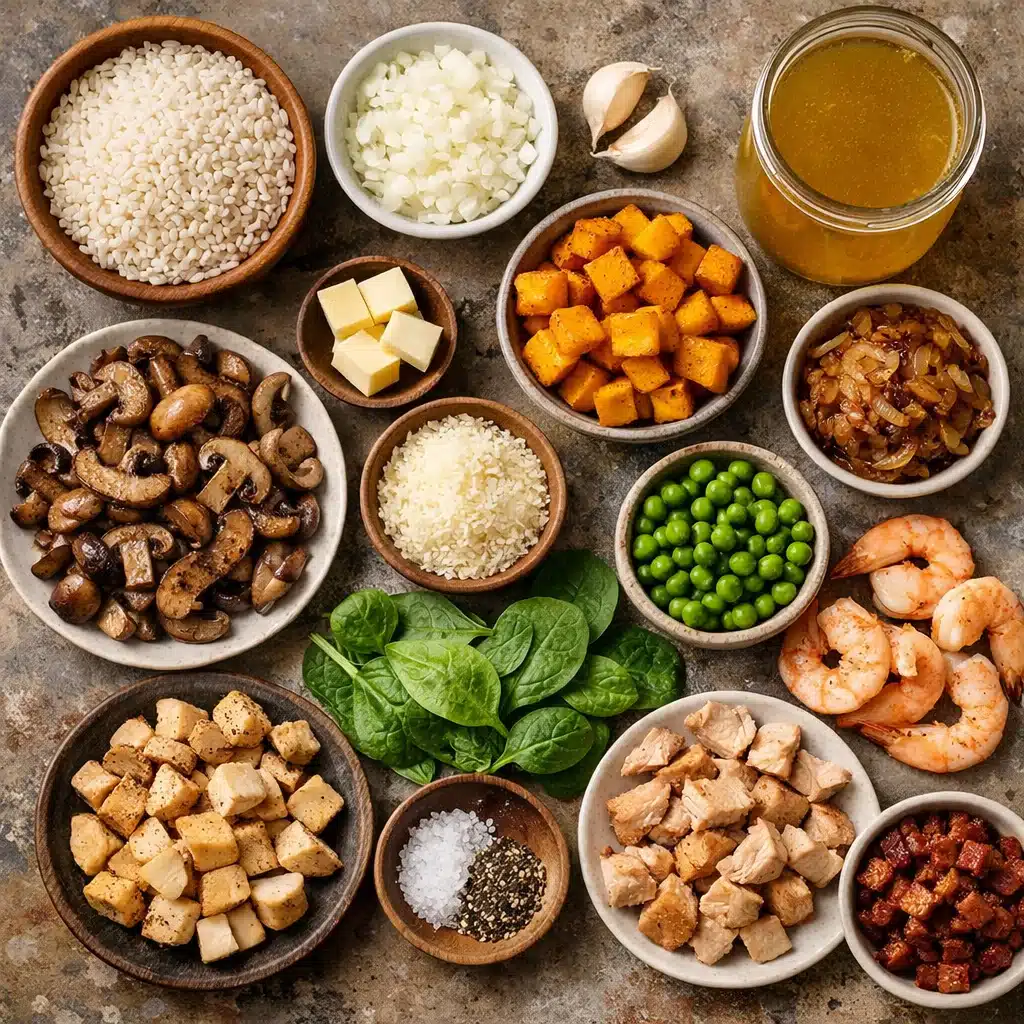
Notes on Ingredients and Substitutions
I’m going to walk you through the ingredients I trust for a solid gluten free risotto. Nothing fancy, just the stuff that works and tastes great. This is also where you can customize based on what you’ve got in the fridge.
Rice: Arborio is the easiest to find and my go to. Carnaroli is a little more “fancy restaurant” if you can find it, but Arborio still makes a creamy, dreamy bowl.
Broth: Use a broth labeled **gluten free**. If you’re super sensitive, also check for shared facility notes. Homemade stock is obviously the safest, but I’m not pretending I do that every week.
Cheese: Parmesan is naturally gluten free, but always check shredded or pre grated versions because anti caking agents can vary. I usually buy a wedge and grate it myself because it melts better anyway.
Wine: Most wine is gluten free, but if you skip it, just add a squeeze of lemon at the end for brightness. Works like a charm.
Butter and olive oil: Either one is fine. Butter gives that classic cozy taste. Olive oil is great if you’re keeping things dairy light.
Fun add ins: Mushrooms, peas, spinach, roasted squash, caramelized onions, shrimp, chicken, crispy pancetta (check labels). This is where risotto becomes your personality for the night.
And since dessert somehow always “accidentally” happens at my house, I’ll casually mention these gluten free tiramisu brownies. They’re rich, a little dramatic, and perfect after something savory like risotto.

How to make gluten-free risotto
This is the method I’ve used so many times I could probably do it half asleep. The key is patience and warm broth. You don’t need chef skills, you just need to stay nearby and stir here and there.
My go to gluten free risotto method
What you’ll need: Arborio rice, onion or shallot, garlic (optional), gluten free broth, butter or olive oil, Parmesan, salt, pepper, and any add ins you love.
How I do it:
First, I warm my broth in a pot next to the risotto pan. It doesn’t need to boil, just stay hot. In a wide pan, I sauté finely chopped onion in butter or olive oil until soft. Then I stir in the rice and let it toast for about a minute, just until the edges look a little translucent.
Next comes the slow part: I add a ladle of warm broth, stir, and let it absorb. Repeat, ladle by ladle, until the rice is tender and creamy. Usually 18 to 25 minutes, depending on your stove and how “al dente” you like it.
When it’s almost done, I stir in Parmesan and a final little knob of butter for that glossy finish. Taste it, then add salt and pepper. If it feels too thick, splash in more broth. If it feels too loose, simmer it another minute.
“I made this gluten free risotto exactly how you described and it turned out restaurant creamy. My family didn’t even realize it was gluten free until I told them.”
If you’re the type who loves bread with your risotto (hi, same), this no knead gluten free artisan bread is perfect for scooping up the last bites.
Serving suggestions
Risotto is one of those dishes that can be a cozy main or a fancy side depending on what you put next to it. I’ve served it both ways, usually depending on how hungry everyone is and how much energy I have.
- Mushroom risotto: sauté mushrooms separately until golden, then stir in at the end.
- Lemon and pea risotto: stir in peas, lemon zest, and a squeeze of lemon juice.
- Chicken dinner vibe: top with sliced roasted chicken or serve alongside something hearty.
- Seafood night: shrimp added at the end cooks fast and feels special.
- Veggie comfort: spinach, roasted tomatoes, or roasted butternut squash.
If you want another cozy, stuffed dinner idea for a different night, I’m obsessed with these satisfying gluten free stuffed bell peppers dinner ideas. They hit the same comforting note as risotto but with way less stirring.
How to store
Risotto is best right after it’s made, when it’s creamy and loose. But leftovers still totally work, you just need to revive them a little.
Storing and reheating without sadness
Fridge: Store in an airtight container for up to 3 days.
Reheat: Add a splash of broth or water, then warm it slowly on the stove, stirring until creamy again. Microwave works too, just stir halfway and add liquid as needed.
Freezer: You can freeze it, but the texture won’t be quite the same. If you do freeze, thaw in the fridge overnight and reheat with broth.
Little trick I use: if the leftovers feel thick and clumpy, I treat it like a blank canvas and turn it into crispy risotto cakes in a pan. Not traditional, but very satisfying.
Common Questions
1) is risotto gluten free at restaurants?
Sometimes yes, sometimes no. The rice is gluten free, but restaurant broth and cross contact are the big concerns. Ask about the broth and how it’s cooked.
2) Is Arborio rice gluten free?
Yes, Arborio rice is naturally gluten free. Just buy a plain bag of rice, not a seasoned mix.
3) Can I use bouillon cubes for gluten free risotto?
You can, but check labels carefully. Some bouillon has wheat based flavorings. I only use ones clearly labeled **gluten free**.
4) Why is my risotto not creamy?
Usually it’s one of three things: the broth wasn’t warm, you added too much liquid at once, or you didn’t give it enough time to absorb and release starch. Keep the broth warm and go gradually.
5) Is risotto safe for celiac disease?
It can be, as long as all ingredients are verified gluten free and you avoid cross contact. At home it’s easier to control. When eating out, ask direct questions and don’t be afraid to skip it if the kitchen can’t confirm.
A cozy bowl you can actually trust
So here’s the takeaway: is risotto gluten free depends on the ingredients around the rice, especially the broth and any add ins. If you cook it at home with labeled gluten free broth and simple ingredients, it’s one of the easiest comfort foods to keep safe and delicious. If you want more inspiration, check out Gluten-free Risotto with Mushrooms for a cozy variation, or this Gluten Free Parmesan Risotto – Eat With Clarity for another reliable approach. Now grab your pot, put on something good to listen to, and give it a stir, you’ve got this.

Gluten-Free Risotto
Ingredients
Main Ingredients
- 1 cup Arborio rice The main ingredient for the risotto.
- 4 cups gluten-free broth Ensure it's labeled gluten-free.
- 1 onion or shallot, finely chopped For flavor, sauté until soft.
- 2 tablespoons butter or olive oil For sautéing the onion and adding richness.
- 1/2 cup Parmesan cheese, freshly grated Adds creaminess; check the label for gluten-free.
- salt and pepper to taste For seasoning.
Optional Add-ins
- 1 cup mushrooms, sautéed For mushroom risotto.
- 1/2 cup peas For lemon and pea risotto variation.
- 1 cup shrimp For a seafood risotto.
Instructions
Preparation
- Warm the gluten-free broth in a pot next to the risotto pan, keeping it hot but not boiling.
- In a wide pan, sauté finely chopped onion in butter or olive oil until soft.
- Stir in the Arborio rice and let it toast for about one minute until the edges look translucent.
Cooking
- Add a ladle of warm broth to the rice, stir, and let it absorb.
- Repeat adding broth ladle by ladle until the rice is tender and creamy, which usually takes 18 to 25 minutes.
- When the rice is almost done, stir in the grated Parmesan cheese and a little knob of butter for a glossy finish.
- Taste and add salt and pepper as needed; if too thick, splash in more broth.